
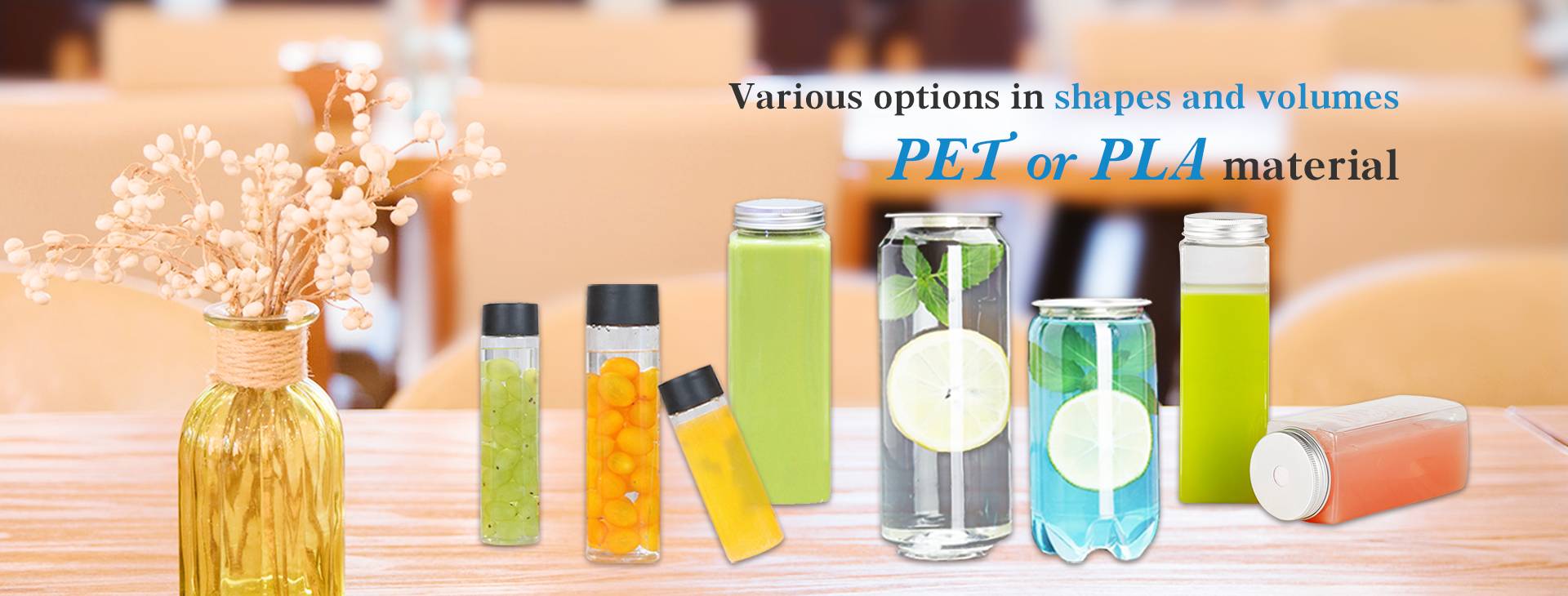
PET Bottles

China Manufacturer Biodegradable Disposable biodegradable straw

I’m a China-based manufacturer, and I offer Biodegradable Disposable biodegradable straw crafted for bulk orders. These straws are made from plant-based materials, fully compostable, and meet EN 13432 standards for industrial composting. They’re sturdy enough for iced beverages and hot drinks, with leak-resistant design and smooth edges for safe sipping. I provide OEM/ODM options, customization of colors and branding, and fast lead times for distributors, hotels, and catering chains. Our supply chain is transparent, traceable, and compliant with food-contact regulations in China and abroad. By choosing our straws you reduce plastic waste, lower your carbon footprint, and strengthen your sustainability claims with clients. Minimum order quantities are flexible, and I can arrange packaging in sleeves, cartons, or pre-labeled sets. If you need a reliable partner in the China market, I’m here to support your scale-up needs.

Hot Selling Product

Biodegradable Disposable biodegradable straw Industry Giant For the Current Year

As an industry giant in biodegradable disposable straws for the current year, we combine large-scale manufacturing capacity with strict environmental standards to meet global demand. Our product range includes compostable PLA, paper and advanced biodegradable blends that comply with ASTM D6400/EN13432 and relevant food-safety regulations. Rigorous quality control, customizable sizes, colors and printing, plus competitive pricing ensure stable supply for cafés, chains, distributors and retailers worldwide. With extensive export experience, flexible MOQs, fast sampling and reliable lead times, we support buyers with full documentation, third‑party testing and sustainable sourcing claims to strengthen your brand’s ESG profile. Whether you need private-label solutions, bulk supply or guidance on regulatory compliance in target markets, our manufacturing and logistics capabilities are geared to scale with your business needs.

{ Biodegradable Disposable biodegradable straw Industry Giant For the Current Year}
Metric Current Year Value Notes
Estimated Global Demand (units) ≈ 25 billion units Aggregate industry estimate across on‑trade and off‑trade channels for the current year.
Estimated Annual Material Weight ≈ 200,000 metric tons Total mass of biodegradable raw materials in finished straw products (approximate).
Regional Production / Demand Share APAC: 62%
North America: 20%
Europe: 13%
Rest of World: 5%
Asia-Pacific remains the dominant region for single-use biodegradable straw production and consumption.
Production Share by Material Type Paper 54% · PLA 22% · Bagasse 14% · PHA 6% · Other 4% Shares reflect finished-product output mix across global manufacturers (rounded).
Projected CAGR (next 5 years) ~7.0% annually Market expansion driven by regulatory bans on conventional plastic straws and increased foodservice demand for compostable options.
Industrial Compostability Certification Adoption ~58% certified Share of products carrying industrial compostability certification (EN 13432 / ASTM D6400) or equivalent.
Home Compostability Claims ~18% claimed Home‑compostable certification and verified performance remain less widespread than industrial certifications.
Typical Industrial Composting Time Paper: 2–6 weeks
PLA: 6–12 weeks
Bagasse: 6–12 weeks
PHA: 4–8 weeks
Decomposition time ranges under standardized industrial composting conditions; actual times vary with process parameters.
Marine Biodegradability Status No universal certification Some materials (e.g., certain PHA formulations) pass marine biodegradation tests; most claims must be validated case-by-case.
Lifecycle GHG Reduction vs Conventional Plastic ~30–60% lower CO2e Range depends on feedstock, manufacturing energy mix and end‑of‑life pathway; numbers are typical reported ranges.
End-of-Life Distribution (estimated) Landfill 45% · Industrial Composting 35% · Recycling streams 10% · Home Composting 6% · Unknown 4% Actual disposal behavior varies by region and availability of composting infrastructure.
Regulatory Adoption Bans / restrictions in >60 jurisdictions Many countries and municipalities restrict conventional plastic straws, encouraging compostable alternatives and labeling rules.
Primary Applications (share) Foodservice 76% · Retail packaged 14% · Events & Hospitality 10% Foodservice (on‑trade) remains the largest usage segment for disposable biodegradable straws.
Average Unit Weight (typical) Paper ~0.6 g · PLA ~0.7 g · Bagasse ~0.9 g · PHA ~0.6 g Average weights for standard-length disposable straws; depends on wall thickness and diameter.
Typical Wall Thickness (mm) Paper 0.25–0.50 · PLA 0.25–0.40 · Bagasse 0.30–0.60 · PHA 0.20–0.50 Design ranges balance stiffness, liquid dwell time and material use.
Performance Considerations Sogging, heat resistance, rigidity vary by material Paper has improved coatings and layering; PLA performs well for cold drinks but has limits with hot liquids; bagasse offers high stiffness but higher mass.
Data reflects aggregated industry indicators and commonly reported performance and certification patterns for the current year.

Related Products

Eco Friendly Products

Biodegradable Disposable biodegradable straw Trusted by Pros More Than a Supplier - A Partner

Adoption Rate vs. Supply Reliability for Biodegradable Disposable Straws (2018–2025)

This chart compares two related supply-chain and market metrics for biodegradable disposable straws between 2018 and 2025: the market adoption rate (percentage of foodservice orders using biodegradable straws) and a supplier reliability index (operational reliability scored 0–100). From 2018 to 2025 we observe a steady rise in adoption from a low base (around 12% in 2018) to widespread use (approximately 72% by 2025), driven by regulatory pressure, increasing consumer preference for sustainable options, and expanded availability. Supplier reliability improves in parallel from the mid-50s to the high-70s, reflecting investments in production scale-up, improved logistics, and quality assurance, though there is a mild dip in reliability around 2024 indicating a transient supply disruption or capacity constraint. The concurrent upward trends suggest a positive correlation: as suppliers become more reliable, customers adopt biodegradable options faster. However, the non-linear segments reveal important nuance: a sharp adoption increase in 2020–2022 outpaced reliability gains, implying that demand surged faster than supply stabilization efforts; this can create short-term shortages or inconsistent product quality. Key implications: first, maintaining or improving supplier reliability is essential to sustain adoption momentum — a reliability index below the mid-60s risks damaging buyer confidence even if demand is high. Second, coordinated investment in inventory buffers and diversified sourcing can reduce the impact of isolated dips. Third, data-driven forecasting and capacity planning should prioritize the 2023–2025 window, where adoption is highest and sensitivity to disruptions increases. Overall, the dataset indicates a maturing market where alignment between production reliability and market demand will determine whether growth is sustained smoothly or punctuated by periodic supply shocks.

Top Selling Products

Subscribe To Our Newsletter

For inquiries about our products or pricelist, please leave your email to us and we will be in touch within 24 hours.

Follow Us

on our social media
  • whatsapp (1)
  • instagram
  • youtube