



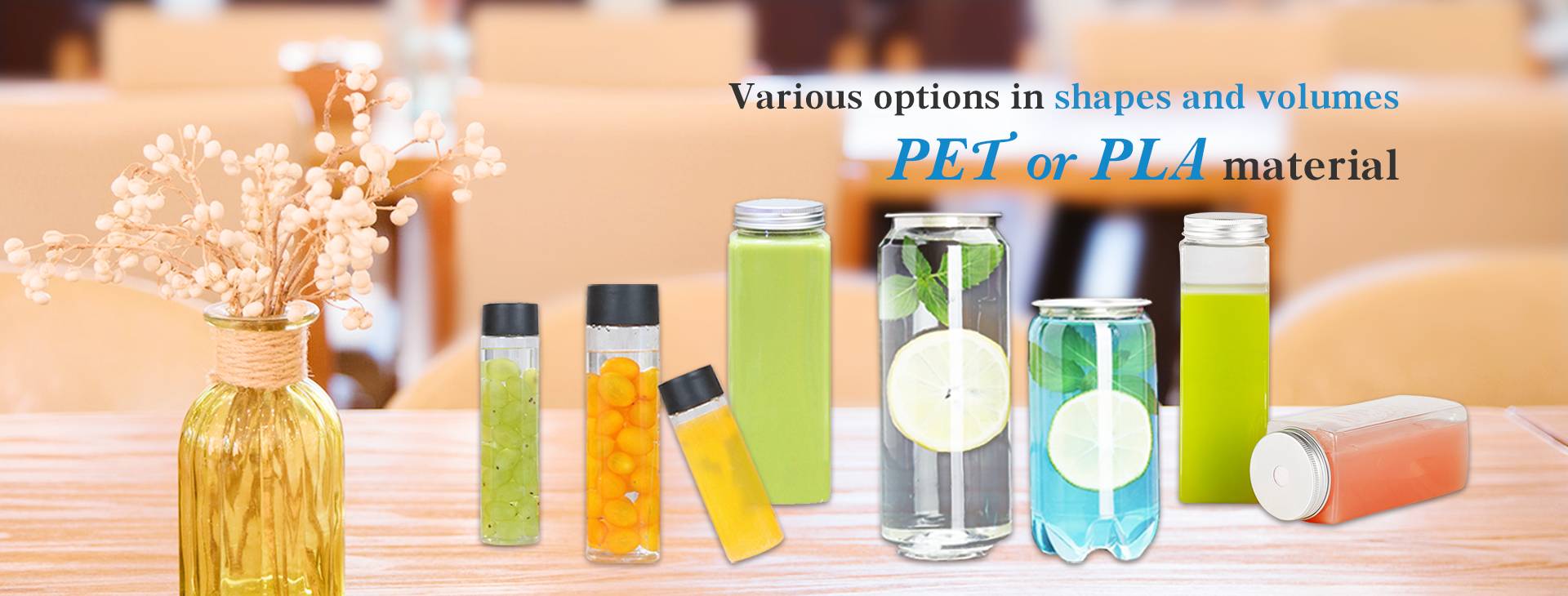
PET Sauce Bottle - China Manufacturer for Food-Grade Packaging
As a China-based manufacturer, I offer a reliable PET sauce bottle for your packaging line. I know B2B buyers value safety, consistency, and cost, so our bottles are food-grade, BPA-free, and compatible with standard capping systems. We provide the PET sauce bottle in multiple sizes (50ml, 100ml, 250ml, 500ml) with flip-top or snap-on caps, clear or tinted finishes. We also offer label printing or full-labeling services. Our MOQ is friendly for startups and scalable for large runs, with competitive pricing. Lead times are short thanks to our in-house production, quality checked at every step. We track every batch with lot codes for traceability. OEM/ODM is welcomed; we tailor colors, caps, and packaging to your needs. If you’re sourcing a dependable PET sauce bottle supplier in China, I’m ready to discuss volumes, timelines, and budget.


PET sauce bottle Manufacturer From Concept to Delivery
From concept to delivery, a dedicated PET sauce bottle manufacturer streamlines every step for global buyers seeking reliable, food-safe packaging. Beginning with collaborative concepting and 3D prototyping, the team optimizes neck finish, squeeze performance and barrier requirements while offering PCR and lightweighting options to meet sustainability goals. Material selection, regulatory compliance for food contact, and customized decoration (labels, shrink sleeves, hot-stamp) are integrated early to reduce time-to-market and packaging failures. In manufacturing, precision tooling and injection/stretch-blow molding ensure consistent wall distribution and tight tolerances for high-speed filling lines. Rigorous quality control — raw material checks, dimensional inspection, leak and drop tests — plus traceable batch records support international standards (FDA, EU). Flexible production runs, reliable packaging, bonded warehousing and global logistics partnerships enable predictable lead times and scalable supply. End-to-end project management and after-sales support make it straightforward for procurement teams to secure competitive, compliant PET sauce bottles ready for market.
{ PET sauce bottle Manufacturer From Concept to Delivery}
| Stage | Description | Typical Duration | Key Specifications | Materials & Additives | Quality Checks | Documentation | Sample Lead Time | Typical Daily Output | Shipping Prep Time |
|---|---|---|---|---|---|---|---|---|---|
| Concept & Design | Initial product brief, design sketches, and bottle ergonomics tailored for sauce dispensing and shelf presentation. | 1–2 weeks | Volumes: 150–750 mL; Neck finish: 28/410 or 38/400; Wall thickness: 0.7–1.5 mm | Standard PET (virgin or rPET blend); optional barrier coatings; slip agents for filling line | Design reviews, ergonomic fit tests | Concept sketches, initial CAD files, design brief | 3–7 days | n/a (design phase) | n/a |
| Engineering & CAD | Detailed CAD modeling, stress analysis for drop resistance, and toolability review for injection stretch blow molding. | 1–3 weeks | Critical dims: neck OD/ID, base radius, label panel area, weight target ±5% | PET grade selection (IV range noted), colorants if translucent or tinted options | Finite element checks, draft angle verification | Detailed CAD, engineering change notes (ECNs), material spec sheet | 5–10 days | n/a | n/a |
| Prototyping | 3D-printed or machined prototypes for fit and feel; low-volume blow molded samples to validate dimensions. | 2–4 weeks | Prototype volumes, cap fit tests, dispensing aperture behavior | Prototype materials mimic production PET; surface finishes sampled | Dimensional inspection, cap torque & sealing tests | Prototype reports, test photos, revision list | 7–21 days | n/a | n/a |
| Tooling & Mold Making | Precision mold manufacture for preform and blow mold, with hardened tool steel for production lifetime. | 6–12 weeks | Cavities: single to multi-cavity; cooling channel design; expected cycle time 2–10 s (preform/pet line dependent) | Tool-steel specs; surface coating options to control release | Mold trials, first article inspection (FAI) | Mold drawings, capability reports, maintenance schedule | 10–21 days after approval | n/a until commissioning | n/a |
| Pilot Production | Small batch runs to validate mold performance, cycle times, weight consistency and post-processing (trimming, annealing). | 1–3 weeks | Sample run volumes 1,000–20,000 pieces; target weight tolerance ±3% after cooling/anneal | Production-grade PET, oxygen barrier if required (coating or multi-layer preform) | Statistical process control (SPC), leak & pressure tests, visual defect rate | Pilot run reports, SPC charts, corrective actions | 7–14 days | 5,000–60,000 units/day (line dependent) | 2–4 days |
| Quality Assurance | Full QA protocols including material certification, migration testing (for food contact), and mechanical performance. | Ongoing during production | Compliance with food-contact regulations; dimensional tolerance table; sealing performance | Batch traceability for resin lots; certificate of analysis (COA) maintained | Incoming resin checks, drop & burst tests, oxygen transmission rate (OTR) if applicable | QA checklist, COAs, test certificates, audit logs | n/a (continuous) | Varies by order | 1–3 days |
| Full Production | Sustained runs on blow molding and finishing lines, with inline inspection and automated weight control. | Based on order schedule (weeks–months) | Cycle time targets, scrap rate targets (<2–5%), label area spec | rPET blends possible to meet sustainability targets; anti-block agents as needed | Inline vision systems, random sample mechanical tests | Production logs, batch traceability, change control records | n/a (product available for sampling earlier) | 20,000–200,000 units/day (facility dependent) | 2–5 days |
| Filling & Capping Integration | Compatibility checks with customer filling lines, cap torque profiling, and rinse/sterile prep if required. | 1–2 weeks for trials | Cap closure torque range, dispensing nozzle compatibility, headspace control | Cap material specs (PE/PP), liner options for sealing | Leak tests under pressure, torque verification, aerosol/viscosity run checks | Integration test reports, filling compatibility matrix | 3–10 days | Dependent on filler speed (5,000–150,000 units/day) | 1–3 days |
| Secondary Packaging | Labeling, sleeving, boxing, and pallet configuration optimized for retail display and transport protection. | 1–2 weeks to finalize | Label placement tolerance ±1–2 mm; pallet pattern, carton dimensions | Recyclable carton board, shrink sleeve materials, adhesive specifications | Drop tests, compression tests, label adhesion checks | Packing specifications, pallet manifest templates, product labeling files | 5–12 days | Aligned to production (varies) | 2–6 days |
| Logistics & Delivery | Final QA clearance, palletization, customs documentation if exported, and carrier handoff scheduling. | Preparation 2–7 days; transit depends on route | Pallet weight limits, labeling for transport, stacking instructions | No materials specified here (logistics-focused) | Final inspection, seal verification, transport damage simulation for new routes | Bill of lading, export declarations, QA release certificate | n/a | n/a (logistics) | 2–14 days (depends on carrier & destination) |
Related Products


PET sauce bottle Factory Leads the Global Market
Top Selling Products


- Related Blog
- Reviews
- Reviews
